Lung Power —
The Forgotten
Secret Behind
Strength, Stamina,
and Muscle Building
Every set you have ever performed depended on a physiological system that receives almost no attention at all
The human grizzly that was Brian Blessed suddenly leapt from his chair. Filling his enormous lungs to their full capacity and throwing out his arms, the actor unleashed the kind of earth-shaking roar that has become his trademark.
"Flash Gordon... HE'S ALIVE!"
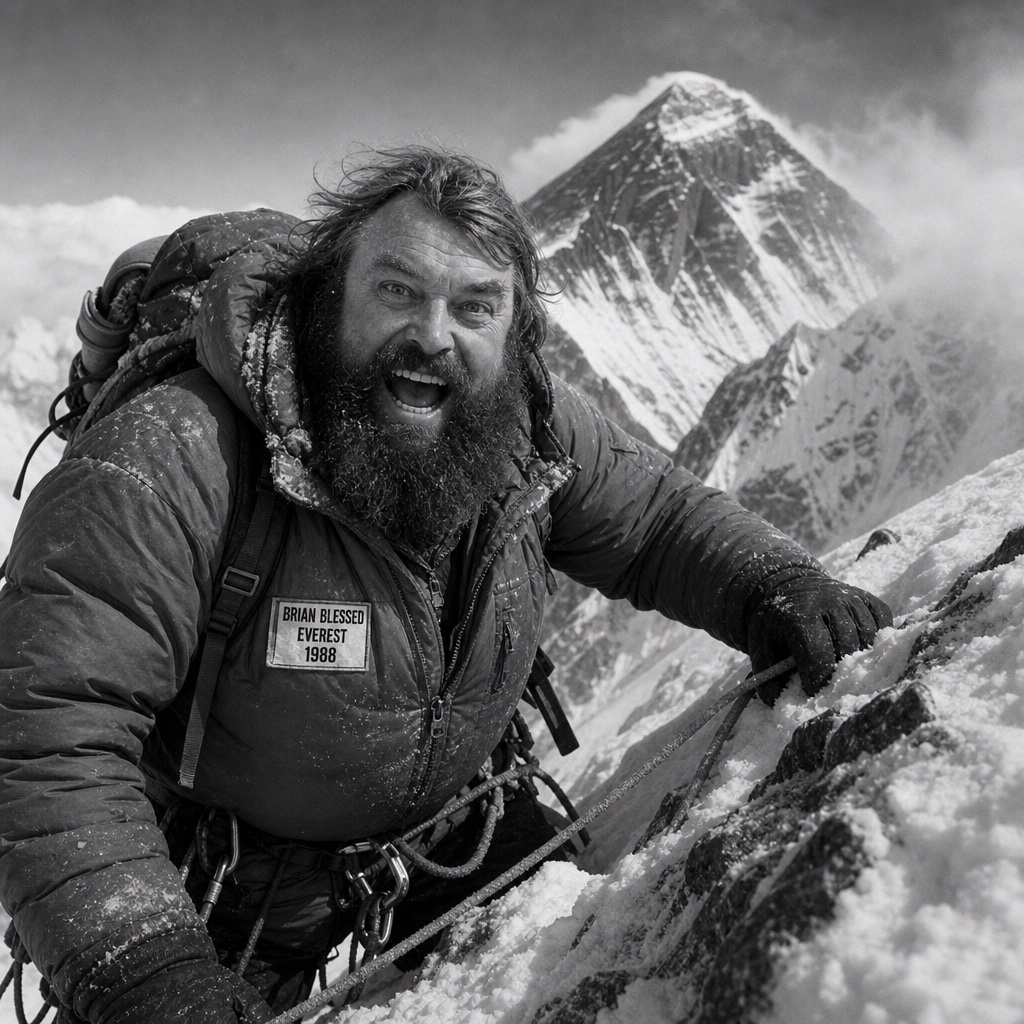
Blessed was appearing on television, recounting stories from a life that seemed too outrageous to be true — climbing mountains, surviving adventures that would terrify most people, and scaling the slopes of Everest without supplementary oxygen. What made this achievement even more remarkable was that he accomplished it well into later life. According to Blessed, his lungs were unusually large. Whether discussing mountaineering, acting, diving, or exploration, he often credited his remarkable lung capacity as one of the foundations of his endurance and resilience.
Hidden within that entertaining story is a lesson that applies directly to every person who wants to build muscle, increase strength, improve fitness, and enjoy better health. Because breathing is something we perform thousands of times every day without conscious thought — yet few trainees appreciate just how important lung power is to their training success.
"I am lighter than a feather, yet the strongest man in the world cannot hold me for much more than a minute. What am I?"
Breath.
The foundation of every repetition ever performed. The system most lifters never think about.
A man whose extraordinary respiratory capacity became the foundation for feats most people half his age would not attempt.
Reached 28,000 feet on Everest without supplementary oxygen — an achievement that demands extraordinary respiratory capacity and cardiovascular efficiency.
Mountaineering, diving, exploration — a life of sustained physical challenge maintained well into later decades on the foundation of his exceptional lung capacity.
His famous stage and screen voice — capable of filling theatres without amplification — is itself a demonstration of the respiratory power he trained and maintained throughout his career.
Blessed credited his lungs explicitly and consistently. Not his muscles, not his willpower — his lung capacity. The forgotten foundation of physical performance.
Every muscle contraction requires energy —
every repetition demands oxygen.
Most gym-goers obsess over muscles. They focus on chest size, arm measurements, visible definition, and the amount of weight on the bar. Yet every set they perform depends upon a physiological system that receives remarkably little attention — their respiratory system.
The lungs serve as the delivery mechanism for oxygen — one of the most essential components of human performance. Every muscle contraction requires energy. Every repetition demands oxygen. Every workout challenges the body's ability to transport oxygen efficiently while removing carbon dioxide and metabolic waste products. When breathing becomes laboured, performance suffers. Strength declines. Recovery slows. Fatigue arrives more quickly. Conversely, when the respiratory system functions efficiently, the entire body benefits.
This is why athletes from virtually every sport devote considerable attention to conditioning and breathing efficiency. They understand that stronger lungs translate into greater work capacity, improved recovery, and enhanced performance. Many strength trainees assume lung power only matters to runners, cyclists, or endurance athletes. Nothing could be further from the truth.
Breath is power. Every workout depends upon it. Every physical achievement relies upon it. Every muscle you hope to build requires the oxygen your lungs provide.
Compound movements that train multiple muscle groups simultaneously — squats, deadlifts, presses, rows — also demand the greatest respiratory effort. The Minimum Effective Strength System is built around these movements precisely because they deliver the greatest whole-body training return — respiratory included.
The twenty-repetition squat — where lung power and
muscle building converge into a single brutal exercise.
One of the most fascinating examples of the relationship between lung power and muscle building can be found in one of the oldest training methods in physical culture — the twenty-repetition squat. Few exercises have acquired a more legendary reputation among serious strength enthusiasts. The programme became famous through the work of Joseph Curtis Hise and later inspired generations of trainees seeking rapid gains in muscular bodyweight and overall physical development.
At first glance, the method appears deceptively simple. Select a weight you would normally use for approximately ten repetitions and somehow force yourself to complete twenty. The secret lies in what happens between those repetitions. As fatigue accumulates, trainees are instructed to take multiple deep breaths between each squat. By the final repetitions, some individuals may be taking five, six, or even ten enormous breaths before attempting another rep.
The result is an exercise that challenges not only the legs and lower body, but the lungs, heart, nervous system, and entire organism simultaneously. Many trainees describe the experience as transformative. The exercise does not merely build stronger legs. It seems to trigger a full-body response that stimulates appetite, encourages recovery, and promotes muscular growth throughout the body. For this reason, old-time strength coaches often referred to twenty-rep squats as a programme that rebuilt men from the ground up. For the full history of the deep-breathing squat tradition, see the homemade squat rack page.
Strength training and cardiovascular fitness united —
not separated into different categories.
Modern fitness culture often separates strength training and cardiovascular fitness into completely different categories. One group lifts weights. Another performs cardio. Rarely do people consider the possibility that certain exercises challenge both systems simultaneously — and that this simultaneous challenge may be one of the reasons old-school trainees possessed impressive levels of fitness despite performing relatively little conventional cardio.
Anyone who has completed a genuinely hard set of squats understands this immediately. The legs burn. The muscles tremble. Yet what many people remember most vividly is the breathing. The lungs feel as though they are working overtime. The chest expands and contracts desperately. The entire body demands oxygen. This intense respiratory challenge strengthens more than the muscles of the legs — it trains the body's ability to cope with physical stress while improving the efficiency of the systems responsible for delivering oxygen throughout the body. Over time, trainees frequently notice improvements in work capacity, recovery, and general conditioning alongside their gains in strength and muscle.
Sitting, poor posture, shallow breathing —
the slow erosion that most people never notice until it is significant.
One reason lung power deserves more attention today is because modern lifestyles actively work against it. Many people spend the majority of their day sitting — at desks, in cars, on sofas. Poor posture becomes commonplace. The chest collapses forward. The diaphragm functions less efficiently. Breathing becomes shallow and restricted.
The body adapts to the demands placed upon it. Provide little demand and the system gradually contracts.
- Prolonged sitting compresses the chest and diaphragm — reducing the depth of each breath below the capacity the body actually possesses
- Forward head posture and rounded shoulders mechanically restrict full chest expansion — common in desk workers and screen users
- Low activity levels mean the respiratory system is rarely challenged — and unchallenged systems gradually lose efficiency
- Regular walking restores incidental movement and challenges the respiratory system at low intensity throughout the day
- Resistance training — particularly heavy compound lifts — demands deep bracing and forceful exhalation that directly trains respiratory musculature
- Deep breathing squats provide the most intensive respiratory challenge available from a single strength training exercise
The good news is that this process is reversible. Regular walking, outdoor activity, resistance training, and occasional challenging efforts such as deep breathing squats can all help restore some of the physical robustness that modern life erodes. The body responds to demand. Provide it and the system responds.
A vital component of strength, health, stamina,
recovery, and longevity — not just for endurance athletes.
The benefits of improved lung power extend far beyond the gym. Efficient breathing is linked to better energy levels, reduced stress, improved cardiovascular health, enhanced exercise tolerance, and greater overall vitality. People who maintain strong respiratory fitness often find everyday activities easier and less tiring. Climbing stairs, carrying shopping, gardening, hiking — all become more manageable when the body possesses adequate reserves of stamina.
This is particularly important for the mature trainee. As we age, preserving strength remains vital. Equally important is preserving the capacity to move comfortably and confidently through everyday life. Strong lungs, healthy cardiovascular fitness, and resilient muscles work together to support independence and quality of life. The goal is not merely to build bigger muscles. The goal is to build a body capable of serving you well for decades.
Brian Blessed may not have been thinking about squat programmes when he stood atop mountains or filled television studios with his famous booming voice. Yet his remarkable life offers a simple and important reminder. Lung power should never be viewed as something reserved for endurance athletes. It is a vital component of strength, health, stamina, recovery, and longevity — and it begins with the breath you take before your next heavy set.
The next time you approach a heavy set of squats, pay attention to your breathing. Notice how the lungs and muscles work together. Recognise that you are training far more than your legs. You are training the machinery that powers the entire body.
You may not develop lungs quite as legendary as Brian Blessed's. But you might just discover a level of strength, stamina, and vitality you never knew you possessed. The compound training of the Minimum Effective Strength System trains the respiratory system alongside the muscular one — because the two are never truly separate.